
Too Long Didn’t Read (TL;DR)
- Lassa fever is a viral illness spread mainly by rats in parts of West Africa.
- Most people have mild symptoms, but some develop serious illness.
- In severe cases, it can be life-threatening.
- Treatment focuses on supportive care, and an antiviral medicine may help if given early.
- Pregnant women are at higher risk of complications.
- Some survivors may experience long-term effects like hearing loss.
Lassa fever is one of those diseases you wish never existed.
It is a serious viral illness that can cause internal bleeding in severe cases.
Lassa fever was first identified in Nigeria in the year 1969, in a town called Lassa, after two missionary nurses died from the disease hence its name [1].
Lassa fever is common in West African regions including Nigeria,Benin, Guinea, Ghana, Mali, Liberia, Mali and Sierra Leone, although due to international travel, cases are heard of outside of West Africa.
In this blog post, we’ll discuss what exactly lassa fever is, its symptoms, treatment and possible complications.
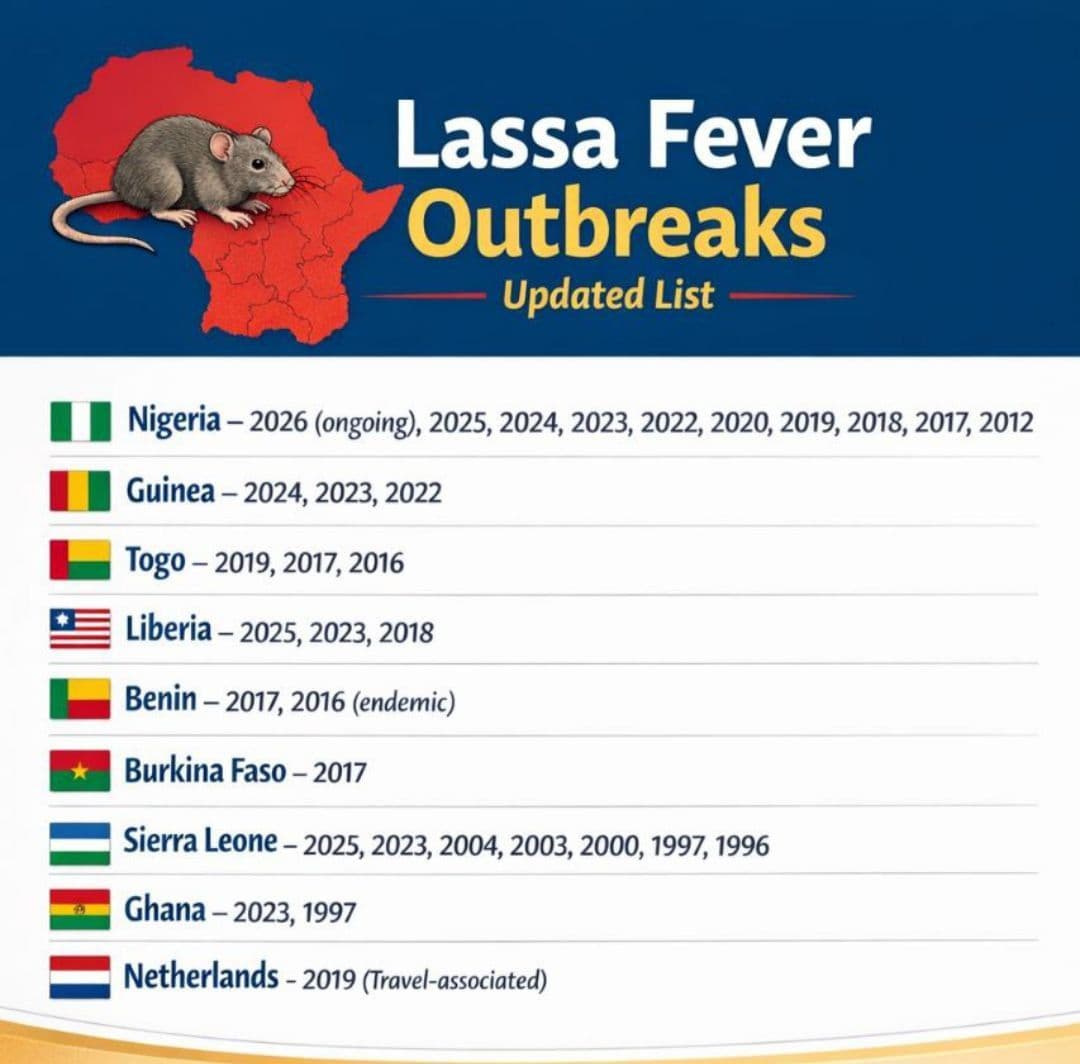
What Causes Lassa Fever?
Lassa Fever is caused by the Lassa virus which is carried by infected Mastomys (or multimammate) rats, found in West African countries [2].
They are multimammates meaning they have multiple breasts.

How is Lassa Fever Transmitted?
Lassa fever is transmitted by a type of rat called Mastomys Natalensis.
These rats harbour the Lassa virus, but do not get infected by it.
However, they move into homes and contaminate exposed foods and surfaces with their urine and faeces.
Consuming these contaminated meals or having contact with a contaminated item is a source of infection. You can also get infected from infected persons by direct contact or sharing sharps.
Lassa virus has also been found in the semen of men who are recovering from the infection, so it’s best to abstain from sexual intercourse for at least 3 months.
If you’re a health worker, you’re at risk of contracting this illness from managing infected patients, emphasising the need for use of PPEs.
Lassa fever does not usually spread through the air like flu or COVID-19[3].
Symptoms of Lassa Fever?
It takes 2-21 days for you to show symptoms after infection with Lassa virus.
Interestingly, 80% of people who become infected with Lassa show no to mild symptoms. For those who show symptoms, symptoms show up gradually and 1 in every 5 of them will experience a severe form of the disease.
Overall, about 1% of infected people die, but the risk is much higher in severe cases.
Symptoms of lassa fever include:
- First few days:
- Sore throat
- Muscle
- Chest pain/cough
- Nausea/vomiting
- Diarrhoea/abdominal pain
2. As the disease becomes severe, you may notice:
- Facial swelling
- Shortness of breath from fluid in the lungs.
- Bleeding through body openings- the mouth, nose, vagina or anus
3. Ultimately, more severe symptoms like:
- Disorientation
- Shock
- Seizure
- Coma
- Or even death
Having Lassa fever in pregnancy can increase the risk of both mother and baby dying due to complications [4].
How Is Lassa Fever Diagnosed?
It might be difficult to differentiate lassa fever from common diseases like malaria and typhoid fever.
However, after samples are safely collected from a suspected infected person, they are sent to a specialised laboratory where they are tested to confirm the diagnosis [5].
Treatment of Lassa Fever
An antiviral medication called Ribavirin, has been used to successfully treat lassa fever, although there are uncertainties about its safety [1].
Apart from thisreatment is majorly supportive and involves giving fluids, blood transfusion and medication to manage symptoms. Starting treatment early can increase the chances of survival for an infected person.
As for prevention, there’s currently no vaccine available for Lassa fever prevention, however, this is still being developed.
Complications of Lassa Fever
Recovery from Lassa fever can take a long time and sometimes lead to other conditions.
Common complications include:
- Sudden hearing loss, which can be permanent
- Fluid in the lungs
- Kidney failure
- Heart inflammation
- Miscarriage in pregnancy
- Visual impairment
- Psychological disorders
- Sepsis (Severe blood infection)
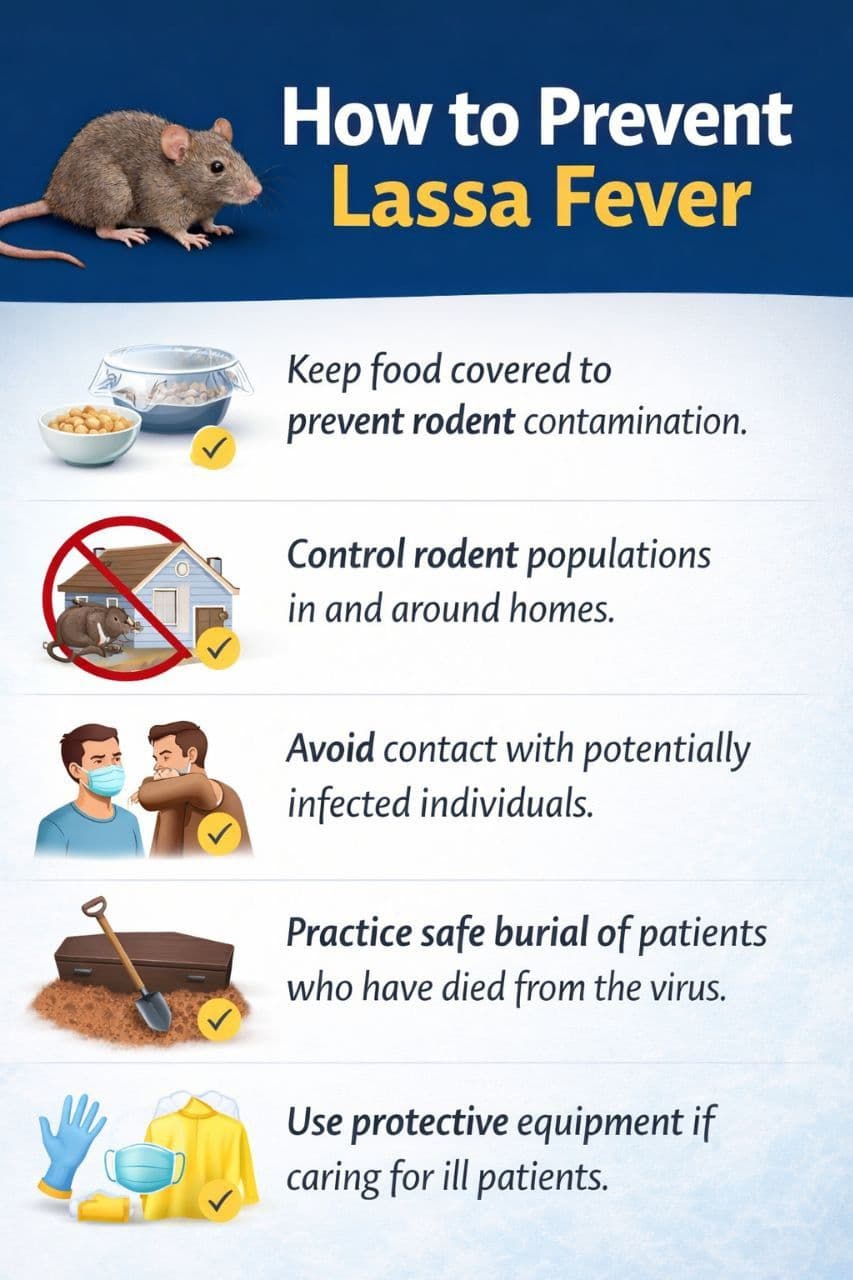
Lassa Fever Prevention
Here are some practical ways to protect yourself from getting infected with Lassa virus;
- Avoid eating rats.
- Avoid contact with sick individuals and anyone showing symptoms of Lassa fever.
- Avoid contact with blood, body fluids, and contaminated items such as clothing, bedding, or medical equipment.
- Minimize exposure to rodents by avoiding areas with rat urine, droppings, or signs of rodent activity, and by storing food in rodent-proof containers.
- Practice food safety: do not eat meat from unknown sources, wash and peel fruit and vegetables carefully, and follow good hygiene when cooking.
- Maintain personal hygiene: wash hands regularly with soap and water (or alcohol gel if unavailable) and follow safer sex practices.
- Use Personal protective equipment as a Healthcare professional.
- Be cautious at funerals: avoid all contact with the deceased, their body fluids, and personal belongings.
- Inform your travel health specialist for advice before going to an endemic country
Conclusion
Lassa fever is a serious illness, but many infections are mild. The risk becomes greater when symptoms are severe or treatment is delayed.
Understanding how the disease spreads and knowing the early warning signs can make a big difference. Simple steps like safe food storage, good hygiene, and avoiding contact with rats can help reduce the risk.
If you live in or travel to affected areas and develop symptoms, seek medical care early. Early treatment saves lives.
Frequently Asked Questions
- Who is most at risk of lassa fever?
People who live in or travel to affected parts of West Africa are most at risk. Healthcare workers and pregnant women are also more vulnerable. Anyone who comes into contact with infected rats or body fluids from an infected person could become infected.
2. Is there a vaccine for lassa fever?
There is currently no approved vaccine, but scientists are working on developing one. For now, prevention focuses on avoiding contact with rats and practising good hygiene.
3. Do all rats cause lassa fever?
No. Lassa fever is mainly spread by a specific type of rat called the Mastomys rat. Not all rats carry the virus, but avoiding contact with rodents is important in affected areas.
4. What is the survival rate of Lassa fever?
Most people who get infected either have mild symptoms or recover fully. However, some people develop severe illnesses. Early medical care greatly improves the chances of survival.
References
- Gov.Uk – Lassa fever: origins, reservoirs, transmission and guidelines
- CDC – About Lassa fever
- WHO – Lassa fever
- Sceince direct – Lassa fever in pregnancy
- Science direct – Lassa fever diagnostics